

Finding the core of a role-playing game
In August I spent a weekend in Drammen as one of the facilitators at Nye Verdener, a development workshop for tabletop role-playing games run by Spillskaperlaget. Ten designers came with games in progress, and on Saturday I had twenty-five minutes to give them a tool for finding the core of their own game before they sat down to playtest it. This post is that lesson, more or less as I gave it.

Why a game needs a core
Most games I see in development do not struggle because the rules are bad. They struggle because they want too many things at once, and every part pulls in its own direction. When you do not know where you are going, every road looks right, which also means every road is wrong. Without a core, each design decision has to be made from scratch and the finished game risks not hanging together. A clear core turns both problems around, because it becomes the filter you run every decision through.

How I found the core of Kvad
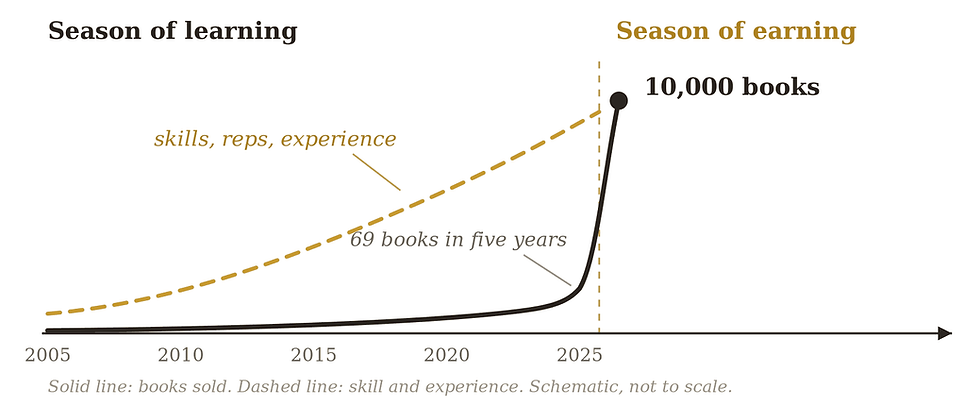
I learned this the slow way. Kvad, my Norwegian Viking role-playing game, took five years to make, and for the first three of them it moved in every direction at once, because I wanted it to be universal, in English, and suitable for everyone. Then I made two choices that changed everything. I would write it in Norwegian instead of English, and I would commit to a Viking theme instead of a generic core. Once the theme was in place the game had a frame, and it became much easier to write, because the frame told me which ideas belonged and which did not. Only later did I come across Jared Sorensen's three questions and recognize the exact move I had stumbled into.
Three questions set the frame
The first question is what the game is about. Start with genre and theme, but bake the premise into a single sentence, or the theme stays decoration. For Kvad the answer is a Viking role-playing game inspired by the sagas, about ordinary people who break away from everyday life to create their own legend.
The second question is how the rules express it. The theme has to live in the mechanics and not only in the names and the illustrations, so at least one core rule should be tightly tied to the first answer. In Kvad you pay the price of your legend with life force and lifespan, through a rule called Wyrd.
The third question is what behavior the game rewards, because players do what pays off and not what you hoped they would feel. Kvad rewards reaching milestones and showing who your hero is, with growth and with a kvad, a poem about your deeds, at the end of each story. It does not reward killing monsters. When the three answers point the same way, they give the game its identity.
The loop is the engine
The other half of the core is the game loop, the sequence of experiences that repeats through play and mirrors the frame. In Kvad the loop runs from everyday life to the breaking away, the journey and the deeds, and ends with the kvad that is sung before the next story begins. Dungeons & Dragons has an equally clear loop, where you defeat enemies, gain experience, grow stronger and face greater dangers. Loops exist at every scale, from one per act to one per session in a West Marches campaign to a single arc across a whole Pendragon campaign. The frame and the loop together make the core.

Try it before your next playtest
The workshop task took about ten minutes. Everyone wrote three sentences on a worksheet, one per question, and then turned the sheet over and drew their loop as three to six boxes with arrows. I asked them to get the first sentence down before anything else, since that is where most of us hesitate. The most rewarding part was hearing, over the rest of the weekend, how the participants put the method to use, and how a clearer sense of their game's core shaped the choices they made as they tested and revised their games.
If you are working on a game of your own, I would suggest the same exercise before your next playtest, because the answers tell you what you are actually testing.
Thank you to Matthijs Holter, Michael Sollien and all the participants for a wonderful weekend. We learned a great deal from each other, and I would recommend that anyone who wants to grow as a game designer apply for the next Nye Verdener.
Best,
Karl Otto

Comments